The Sculptor's Chisel
Menu
At first glance his work seems quite academic. However there seems to be a little more passion than just academic, then I read that Rodin influenced him while he lived in Paris! Brilliant. I think he is worth studying.
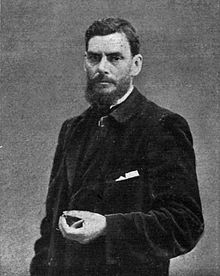
Josep Llimona i Bruguera was a Catalan sculptor. His first works were academic, but after a stay in Paris, influenced by Auguste Rodin, his style drew closer to modernism. He was very prolific, and exhibited in Catalonia, Madrid, Paris, Brussels and Buenos Aires.
He is the greatest Catalan modernist sculptor.
Born in Barcelona in 1864. He was trained in Llotja in Barcelona and the workshop of the brothers Venanci and Agapit Vallmitjana and with Rosend Nobas.
In 1880, he earned the Fortuny pension and went to Rome. During his stay in Italy, he received the influence of the Florentine Renaissance sculpture and performed two obligatory works (Roman Patrici and Ramon Berenguer el Gran , both in 1880).
Its style is characterized by a naturalistic idealism and the taste of the picturesque.
He founded together with his brother the painter Josep Llimona the "Artistic Center of Sant Lluc", a Catalan artistic association of a religious nature - both were deeply believers - currently with great influence within the artistic world in Barcelona.
Later, his style drift towards models already fully Modernist with influences of Rodin and Meunier. Belong to this period "The First Communion" of 1897, the famous " Sant Jordi"(1907) - who received the Honor Prize of the International Fine Arts Exhibition held the same year in Barcelona - located at the Parc de Montjuïc in Barcelona, Desconsol , perhaps his most well-known work, located in the center of the the Pond at the Parc de la Ciutadella in front of the Parliament of Catalonia and "the Idyll."
Starting in 1900, he begins to sculpt his famous feminine knots of great elegance, gently erotic and tenderly melancholic, which he will continue to develop as one of the The most outstanding elements of his work.
In 1914 he created his impressive "Risen Christ" for the monumental Rosary of Montserrat in collaboration with Gaudí .
It combines tenderness and virile strength in works such as "the Student" one of the masterpieces of Catalan sculpture, in the monument to Doctor Robert (Plaza de Tetuán of Barcelona).
The genius of Llimona was also manifested in other fields such as funerary imagery with works such as the cemetery of the South West of Barcelona and the cemeteries of Arenys de Mar and Sitges and in other towns both in Catalonia and abroad of Catalonia.
Josep Llimona also emphasized his activities as a medalist.
In addition to Barcelona and other towns in Catalonia, he exhibited in Europe in Madrid, Brussels and Paris and also in Buenos Aires and Rosario in Argentina.
He was President of the Board of Museums of Barcelona from 1918 to 1924 and again from 1931 until his death in 1934.
He received numerous decorations including the ones awarded by the governments of France and Italy. He was also the first to receive the Gold Medal of the city of Barcelona in 1932 due to his extraordinary work in the development of museum activity.
Josep Llimona i Bruguera, died in Barcelona in 1934.