The Sculptor's Chisel
Menu
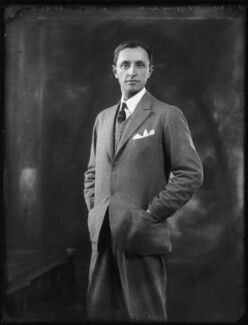
Romano’s father married the daughter of a famous military general Francesco Ferrucci. He was the military commissioner for the Medici family and ship owner. I would suspect this is where he came into a great amount of wealth.
Romano first started studying clay modeling in his fathers studio. Simultaneously his father taught him the art of sculpture. Whilst he was a competent sculptor, he mad his career in the Navy.
Romano was a ranking military officer, with several accommodations. He was stationed in Gibraltar where he married his wife, a daughter of an high ranking Anglican Reverend. He had a winery in Chianti, and a plantation in Somalia growing bananas and grapefruits. His wife was a humanitarian, that built a hospital in Somalia. In 1965 while driving to that hospital, she was murdered by Somali’s.
He studied at the Naval Academy, and as a cadet became a junior officer in the Italian Navy. He made several voyages that served in Africa and the far east. he left the Navy for health reasons. He was recalled twice to the Navy, the Italio-Turkish War, World War. For reasons I don’t understand he was decorated and became an Honorary member of the British Legion.
[/section] [section] [button text="READ MORE" style="underline" link="#bottom"] [/section] [section] [ux_gallery ids="848,847,846,849" style="none" lightbox_image_size="large" type="masonry" image_height="100%"] [/section] [section] [scroll_to title="#bottom" bullet="false"] [/section] [section]
He had several Avant-Garde influences, and studied under many Avant-Garde artists. Yet he remained tied to the classical traditions. The combination of both influences mad his work unique.
He spent a year in Paris, where his work took on a more romantic look. Later as the times in Italy moved towards National Socialism, he began stripping his work of the romanticism and made it more stark and architectural.
He completed several works including a portrait of Mussolini and several architectural works. This was the period of his greatest production and notoriety. In 1039 Italy signed a pact with Germany called the Pact of Steel. Romano became very critical of the Regime at this point. After he criticized the regime publicly arrest warrants were issued for him. He went into hiding, and was denounced by locals. He sought refuge from the Vatican until the end of the war. His wife Dorothea hid many people in secret chambers below their house in Florence. They included many Jews, a Baroness, German Artists all who decried the regime. Dorothea was friends with a local policeman that would issue her warnings as raids were about to take place.
After the war he was nominated Professor of Sculpture at the Italian Academy of Fine Arts, Florence and held the chair for sculpture until 1953. A seal of approval for his artistic accomplishments!
The Romanelli Studio began taking on work converting plasters to marble. One of the most famous monuments was the South African Vootrtrekker Monument. He had one fifty carvers at this time.
His medals and Honors are too numerous to mention here.
Click edit button to change this text. Lorem ipsum dolor sit amet, consectetur adipiscing elit. Ut elit tellus, luctus nec ullamcorper mattis, pulvinar dapibus leo.
[/section] [section] [button text="RETRUN TO TOP" style="underline" link="#top"] [/section]