
skip to content
gold-small

The Sculptor's Chisel

Allegory

« Back to Glossary Index

1: The expression by means of symbolic fictional figures and actions of truths or generalizations about human existence a writer known for his use of allegory also : an instance of such expression The sculpture is an allegory of love and jealousy.
2 : a symbolic representation

Our world abounds with allegory. We encounter it in stories, movies, songs, paintings—anywhere that symbolism is used. An allegory is a work of written, oral, or visual expression that uses symbolic figures, objects, and actions to convey truths or generalizations about human conduct or experience. The word traces back to the Greek word allēgorein meaning "to speak figuratively."

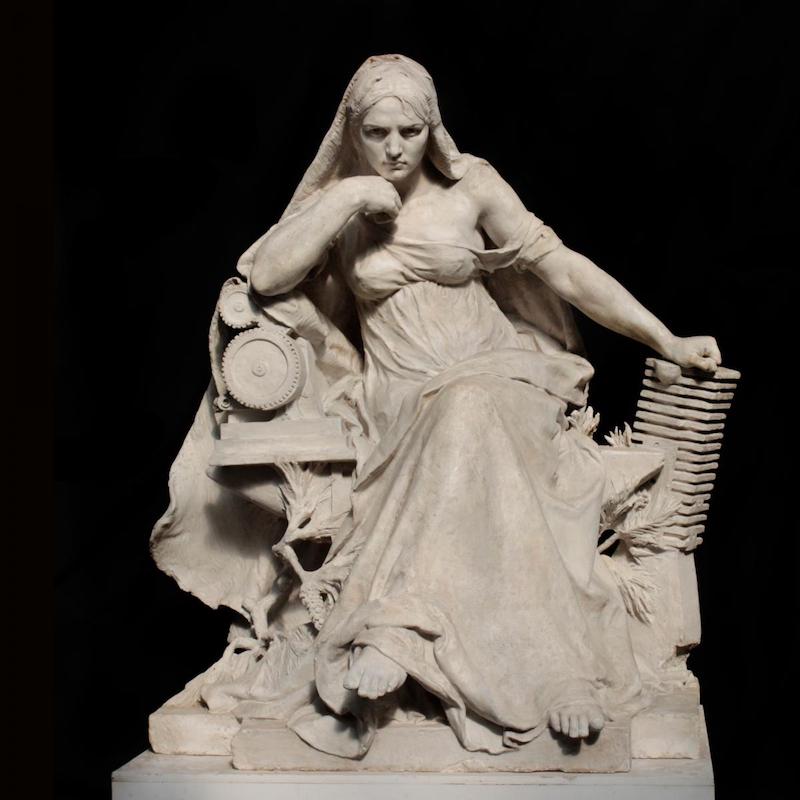
Allegory : Sculptural representation that uses a human and sometimes animal or hybrid figure (lion, dragon, centaur) to represent an idea or an institution. An action and attributes give indications on the meaning of the work.
Allegory-
Allegory-

Raoul Verlet (1856-1930), Allégorie de la Mécanique, XXe

See liminality,

Terms To Help In Your Allegorical Composition

Term Definition
Anagnorisis Is a moment in a play or other work when a character makes a critical discovery. Anagnorisis originally meant recognition in its Greek context, not only of a person but also of what that person stood for. Anagnorisis was the hero's sudden awareness of a real situation, the realization of things as they stood, and finally, the hero's insight into a relationship with an often antagonistic character in Aristotelian tragedy.
Apotheosis (“To deify"; in Latin deificatio "making divine"; also called divinization and deification) is the glorification of a subject to divine level and most commonly, the treatment of a human like a god. The term has meanings in theology, where it refers to a belief, and in art, where it refers to a genre.
Catharsis(Meaning "purification" or "cleansing" or "clarification") refers to the purification and purgation of emotions—particularly pity and fear—through art or any extreme change in emotion that results in renewal and restoration. It is a metaphor originally used by Aristotle in the Poetics, comparing the effects of tragedy on the mind of a spectator to the effect of catharsis on the body.
Epiphany (“manifestation, striking appearance") is an experience of a sudden and striking realization. Generally the term is used to describe scientific breakthrough, religious or philosophical discoveries, but it can apply in any situation in which an enlightening realization allows a problem or situation to be understood from a new and deeper perspective
IneffableIncapable of being expressed in words  indescribable ineffable : too great, powerful, beautiful, etc., to be described or expressed.
Peripeteia Is a reversal of circumstances, or turning point. The term is primarily used with reference to works of literature. The Anglicized form of peripeteia is peripety.
Tragedy Is a form of drama based on human suffering that invokes an accompanying catharsis or pleasure in audiences.While many cultures have developed forms that provoke this paradoxical response, the term tragedy often refers to a specific tradition of drama that has played a unique and important role historically in the self-definition of Western civilization.
« Back to Glossary Index
arrow-up