The Sculptor's Chisel
Menu
The artistic preference of contemporary everyday subject matter instead of the heroic or legendary in art and literature; it is a form of realism. The word comes from Latin verus.
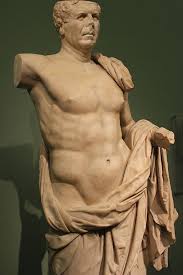
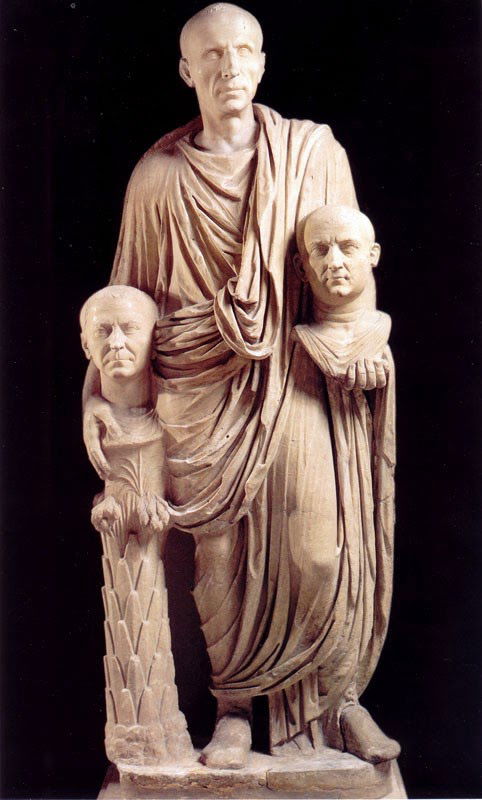
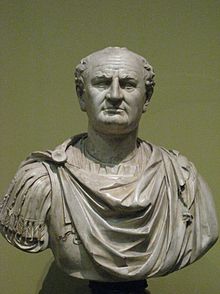
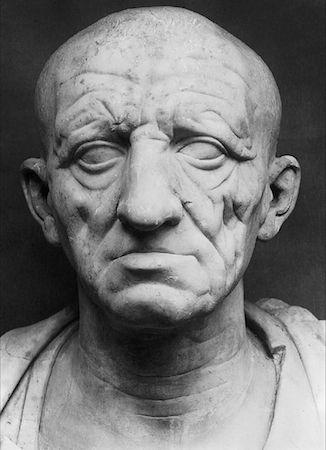
The term verism is thus derived from the Roman Latin word verus (true). In art that translates into a form of realism that takes everything on as it is. I.e. if a producing a veristic sculpture or painting you depict a sitter with warts, wrinkles and all instead of a highly idealised depiction.
In contrast to the Greeks, the Romans used verism in their art rather than idealism. Greek sculptures usually portrayed men with perfect bodies and faces, whereas Roman sculpture portrayed men as themselves or as their real image.
Veristic sculptures usually portray older men with physical imperfections. These imperfections were used to show the individual as he or she was, and to produce an image of individuality. Wrinkles were welcome signs of old age, and old age was a sign that the individual was wise. This can be explained quite simply. While Rome was still a Republic, only the elders actually held power. Hence, republican veristic portraits celebrate higher status in society.
From Italian verismo, from vero true, from Latin vērus
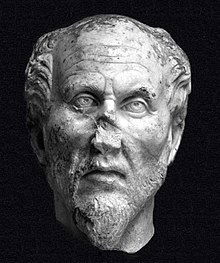
Reading about Plotinus, I found this fascinating -
Plotinus, the philosopher our contemporary, seemed ashamed of being in the body.
So deeply rooted was this feeling that he could never be induced to tell of his ancestry, his parentage, or his birthplace.
He showed, too, an unconquerable reluctance to sit to a painter of a sculptor, and when Amelius persisted in urging him to allow of a portrait being made he asked him, 'Is it not enough to carry about this image in which nature has enclosed us? Do you really think I must also consent to leave, as a desired spectacle to posterity, an image of the image?'
In view of this determined refusal Amelius brought his friend Carterius, the best artist of the day, to the Conferences, which were open to every comer, and saw to it that by long observation of the philosopher he caught his most striking personal traits. From the impressions thus stored in mind the artist drew a first sketch; Amelius made various suggestions towards bringing our the resemblance, and in this way, without the knowledge of Plotinus, the genius of Carterius gave us a lifelike portrait.